
Leadership vs. Management: What’s the Difference
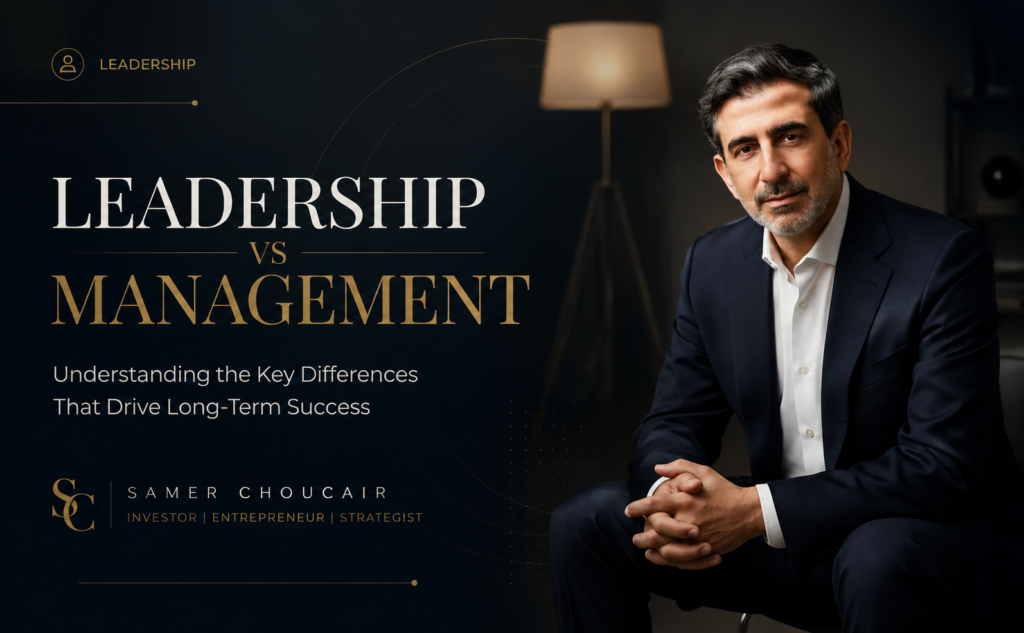
Most leadership advice focuses on personality — confidence, charisma, “presence.” But the leaders who consistently get results tend to share something more concrete: a specific, learnable set of essential leadership skills that show up in ordinary decisions, not dramatic moments.
This guide breaks down what those skills actually are, why they matter more than title or tenure, and how to build each one deliberately — whether you’re leading a five-person team or a growing company. Because these qualities show up in ordinary, daily decisions rather than dramatic moments, they’re worth treating as important leadership qualities you actively develop, not fixed traits you either have or don’t.
Key Takeaways
|
What Makes a Skill “Essential” for Leadership?
Not every capability that gets labeled a “leadership skill” is actually essential. A skill earns that label when it shows up repeatedly, across industries and company sizes, in the decisions leaders make every week — not just in high-stakes moments.
By that standard, the list is shorter than most leadership content suggests. It isn’t about charisma, public speaking, or being the loudest voice in the room. It’s about a small number of habits — communicating clearly, deciding under pressure, delegating without losing quality, staying self-aware, thinking a step ahead, and following through — that compound over time into what looks, from the outside, like natural leadership ability.
Why These Skills Matter More Than Title
A title grants authority. It doesn’t grant the skills required to use that authority well. This distinction matters for three practical reasons:
- Teams follow skill, not rank. People generally comply with a title; they commit to a leader who demonstrates sound judgment repeatedly.
- Skill gaps become more expensive at scale. A communication gap that’s manageable with five direct reports becomes costly with fifty.
- Skills transfer between roles and companies; titles don’t. Someone who has genuinely built these capabilities carries them into any leadership context.
This is also why essential leadership skills are worth treating as a deliberate development project rather than something that arrives automatically with a promotion.
The Six Essential Leadership Skills Every Business Leader Needs
Different roles and industries add their own specialized demands, but across nearly every leadership context, these are the key leadership skills for business leaders operating at any scale — the ones that consistently separate leaders who build lasting trust from those who don’t.
01
Clear CommunicationSaying what you mean plainly enough that no one has to guess at intent or priority. |
02
Decision-MakingMoving forward on incomplete information without freezing or overcorrecting. |
03
DelegationHanding off real ownership, not just tasks, without losing quality or control. |
||
04
Self-AwarenessRecognizing your own blind spots and how your behavior affects others. |
05
Strategic ThinkingConnecting today’s decisions to where the business needs to be later. |
06
AccountabilityOwning outcomes — good and bad — without deflecting or over-explaining. |
||
1. Clear Communication
Most workplace friction traces back to ambiguity, not disagreement. A leader who states priorities, expectations, and reasoning plainly removes the need for a team to guess — which is what most “communication problems” actually are. The common mistake here isn’t talking too little; it’s assuming context that was never explicitly shared.
2. Decision-Making Under Uncertainty
Leaders rarely get to decide with complete information. The skill isn’t eliminating uncertainty — it’s building a reliable process for deciding well despite it: gathering the highest-value information quickly, setting a reasonable deadline for the decision, and moving forward once that deadline arrives rather than waiting for certainty that won’t come.
3. Delegation
Delegation fails most often when a leader hands off tasks but keeps the decision rights — checking in so frequently that the person receiving the work never actually owns it. Real delegation transfers both the responsibility and the authority to make the related decisions, with a clear standard for what “done well” looks like.
4. Self-Awareness
Leaders who lack self-awareness tend to repeat the same mistake in different forms, because they never connect the outcome to their own behavior. Building this skill usually requires an external input — direct feedback, a mentor, or structured self-review — since blind spots are, by definition, difficult to see from the inside.
5. Strategic Thinking
Strategic thinking is the habit of asking “what does this decision mean for where we’re headed in a year,” even when solving an immediate problem. Leaders without this skill solve today’s fire well but repeatedly create tomorrow’s — because short-term fixes were never evaluated against longer-term consequences.
6. Accountability
Accountability is what makes every other skill on this list trustworthy. A leader who communicates clearly, decides quickly, delegates well, and thinks strategically — but deflects blame when something goes wrong — erodes trust faster than someone who is simply less skilled but consistently owns outcomes.
How to Develop These Skills Deliberately
Reading about a skill and building it are different activities. The following sequence turns awareness into an actual, measurable improvement.
|
01
|
Assess Honestly, Not GenerouslyRate yourself on all six skills against real, recent decisions — not how you’d like to see yourself. Ask one trusted colleague to rate you independently and compare. |
|
02
|
Pick One Skill for a Defined PeriodChoose the skill with the largest gap between its impact and your current ability, and commit to focusing on it for 60–90 days rather than all six at once. |
|
03
|
Practice Inside Real DecisionsSkills build through actual use, not simulations. Apply the skill deliberately in real meetings, real delegation decisions, and real feedback conversations. |
|
04
|
Get Structured Feedback, Not Just ImpressionsAsk a specific question after specific events — “how clear was that decision to you?” — rather than a vague “how am I doing as a leader?” |
|
05
|
Review Quarterly and Move to the Next SkillRe-assess against the same six skills, note real change, and select the next-highest-impact gap to focus on. |
This sequence works because it treats leadership skills the way any other business capability gets built — with a defined focus, real repetition, and feedback — rather than expecting improvement to happen passively over time.
Leadership Skills vs. Management Skills
The two overlap heavily but aren’t the same thing. Leadership skills are primarily about direction and people — setting a vision, building trust, making judgment calls under uncertainty. Management skills are primarily about process and execution — planning, organizing, and keeping day-to-day operations on track. Most effective business leaders need both, in different proportions depending on the role and company stage.
A deeper breakdown of this distinction is covered separately, since it deserves its own dedicated treatment rather than a summary here.
Common Mistakes When Building These Skills
- Trying to improve all six at once. This spreads effort too thin to produce a noticeable change in any single skill.
- Confusing confidence with competence. Feeling decisive isn’t the same as deciding well; only outcomes and feedback confirm the difference.
- Avoiding feedback that might be uncomfortable. Self-awareness specifically cannot develop without external input, however unwelcome.
- Treating delegation as offloading. Handing off a task without the authority to make its decisions isn’t delegation — it’s supervised busywork.
- Assuming skill transfers automatically with promotion. A new title doesn’t retroactively install the skills the new role requires.
|
“ The leadership skills that matter most are rarely dramatic — they show up in ordinary decisions, made consistently, over a long period of time. A Perspective on Business Leadership |
Instinct vs. Deliberate Skill-Building
Some leaders develop these skills accidentally, through years of trial and error. Deliberate development gets to the same place faster and more reliably.
| Factor | Relying on Instinct | Deliberate Development |
| Decision-Making | Improves slowly, mostly from painful mistakes | Improves through reviewed decisions and defined process |
| Feedback | Rarely sought out; often avoided | Actively requested after specific events |
| Delegation | Inconsistent — depends on mood and trust in the moment | Consistent standard for handing off ownership |
| Growth Over Time | Plateaus once basic competence is reached | Continues improving through repeated review cycles |
| Consistency | Varies by circumstance and energy level | Stable, because it’s built on process rather than mood |
Final Thoughts
The essential leadership skills covered here aren’t reserved for people with a particular temperament or a corner office. They’re built the same way any business capability is built: identify the specific gap, practice it inside real decisions, get honest feedback, and repeat.
Leaders who treat these skills as a deliberate, ongoing project — rather than a fixed trait they either have or don’t — tend to keep improving long after the leaders around them have plateaued.
FAQ
Frequently Asked Questions
What are the most essential leadership skills for business leaders?
Clear communication, sound decision-making under uncertainty, effective delegation, self-awareness, strategic thinking, and accountability consistently matter most across industries and company sizes.
Can leadership skills be learned, or are some people just born leaders?
They can be learned. Some people start with natural tendencies toward certain skills, but all six develop meaningfully through deliberate practice and feedback, regardless of starting point.
What’s the difference between leadership skills and management skills?
Leadership skills focus on direction and people — vision, trust, judgment. Management skills focus on process and execution — planning, organizing, and operational consistency. Most roles require both.
How long does it take to develop strong leadership skills?
Meaningful improvement in a single skill is often visible within 60 to 90 days of focused practice, though building genuine mastery across all six typically takes years of consistent application.
What is the most important leadership skill for a new manager?
Clear communication and delegation tend to matter most early on, since new managers often struggle to hand off ownership and to state expectations without ambiguity.
How do I know which leadership skill to work on first?
Rate yourself honestly against all six skills, compare that with feedback from a trusted colleague, and start with the skill that shows the largest gap between its impact and your current ability.
Do small business owners need the same leadership skills as CEOs of large companies?
Yes, the same six skills apply at any size. What changes is scale and complexity — a communication gap that’s minor with three employees becomes significant with three hundred.
What are common signs someone lacks essential leadership skills?
Frequent misunderstandings about priorities, decisions that stall indefinitely, delegated work that still requires constant oversight, repeated versions of the same mistake, and a pattern of deflecting responsibility when outcomes go wrong.