
Prince Harry’s Warning Brings Geopolitical Risk into Focus
Vision 2030
Samer Choucair’s reading of Prince Harry’s recent remarks and what they reveal about the persistent presence of geopolitical risk in global markets: Europe’s rearmament as a structural investment theme, how institutional investors can approach it with discipline, and what it means for Saudi Arabia and the Gulf under Vision 2030.
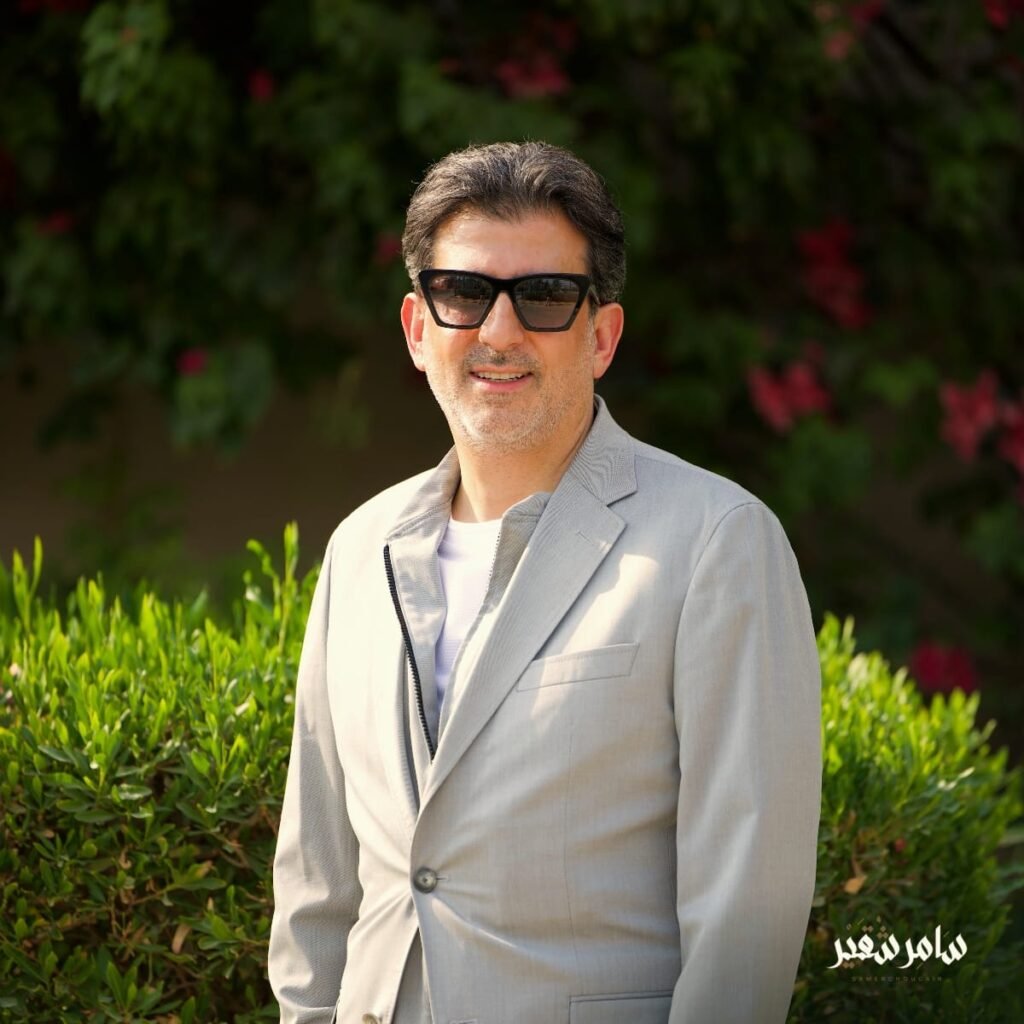
Samer Choucair, investment entrepreneur
Prince Harry’s willingness to rejoin military service if called upon, together with his remark on the growing divide between the US administration and public backing for Ukraine, highlights how persistently geopolitical risk runs through global markets.
Remarks by a public figure outside the world of finance may seem far from investment decisions. In reality, they reflect a broader mood in Europe: a growing recognition that security can no longer be taken for granted, and that defence spending will stay high for years. That mood turns directly into budgets, contracts, and capital flows that shape entire sectors.
In this article, on the Samer Choucair platform, we explain how geopolitical risk moves through markets, set out the latest European defence spending figures from the European Defence Agency, review the sectors Samer sees as worth selective exposure, the risks that call for discipline, and what all this means for Saudi Arabia and the Gulf.
Key Takeaways
- An ever present risk: Geopolitical risk is not a passing event but a constant factor in how assets are priced worldwide.
- Rearmament is structural: Driven by geopolitical risk, EU defence spending reached €418 billion in 2025 and is expected to reach €454 billion in 2026.
- Selective, not reactive: Defence technology, cybersecurity, drones, air defence, and resilient supply chains, with disciplined allocation.
- High valuations are a risk: High valuations and escalation risks call for disciplined allocation rather than reactive buying.
- A strategic opening for the Gulf: Energy security, dual use technology, and localised defence capabilities under Vision 2030.
Table of Contents
- What Is Geopolitical Risk and Why Does It Matter to Investors?
- What Did Prince Harry Say and Why Does It Matter to Markets?
- How Did Europe’s Rearmament Become a Structural Investment Theme?
- Which Sectors Merit Selective Exposure?
- Which Risks Call for Discipline?
- What Does Geopolitical Risk Mean for Saudi Arabia and the Gulf?
- How Can Investors Build Geopolitical Risk Into Their Decisions?
- Frequently Asked Questions
- Conclusion
What Is Geopolitical Risk and Why Does It Matter to Investors?
Short Answer
Geopolitical risk is the possibility that conflicts, tensions between states, and major political shifts affect the economy and markets. It matters to investors because it moves energy prices, currencies, and bonds, redirects government spending toward sectors such as defence, and affects supply chains and company valuations.
Geopolitical risk does not appear directly in company financial statements, yet it is present in almost everything: in the price of oil when shipping lanes come under threat, in the strength of the dollar when investors seek a safe haven, in defence budgets when governments feel threatened, and in production costs when supply chains are disrupted.
| Channel | How Geopolitical Risk Reaches Markets |
|---|---|
| Energy | Threats to supply routes raise oil and gas prices and their volatility |
| Currencies and safe havens | Tension pushes investors toward the dollar, gold, and government bonds |
| Government spending | Governments redirect budgets toward defence and security |
| Supply chains | Companies relocate production and inventory to reduce reliance on exposed sources |
| Valuations | Higher uncertainty raises the return investors demand for taking risk |
The challenge for investors is that geopolitical risk is hard to time or measure precisely. Handling it well does not depend on predicting the next event, but on building a portfolio that can withstand different scenarios, and on benefiting from the structural trends this risk creates over the long term.
What Did Prince Harry Say and Why Does It Matter to Markets?
Short Answer
In an interview with The Telegraph during his visit to Lviv, Ukraine, in November 2026, Prince Harry said he would be ready to return to military service if needed, and pointed to a gap between the US administration’s position on Ukraine and American public opinion.
During his latest visit to Ukraine, where he attended the Ukrainian Invictus Games in Lviv, Prince Harry, who served in the British Army for about ten years, said he would be ready to serve again if asked. He also described a difference between the US administration’s stance and American public support for Ukraine, and called on Europe to stay united in the face of the Russian threat.
The significance of these remarks for investors lies not in who made them but in what they reflect. When someone with this level of media presence talks about possibly returning to military service and points to diverging positions on either side of the Atlantic, it brings geopolitical risk back to the centre of public debate. That debate in turn shapes voter sentiment, governments’ willingness to raise defence spending, and market expectations about how long that spending will last.
Editorial Insight
Markets react not only to events, but to what events reveal about long term trends. The value of individual remarks is that they make those trends visible.
How Did Europe’s Rearmament Become a Structural Investment Theme?
Europe’s rearmament is emerging as a structural investment theme. EU defence spending hit €418 billion in 2025 and is expected to climb to €454 billion in 2026, equal to 2.4% of the bloc’s GDP.
Short Answer
Rearmament has become structural because European defence spending has risen for the eleventh consecutive year, with an increase of about 20% in 2025 compared with 2024, and is expected to keep rising, supported by EU funding initiatives and fiscal flexibility for member states.
According to European Defence Agency data published in July 2026, European defence spending is not only growing in size but also changing in composition, with a growing weight for equipment and research and development:
| Indicator | Value |
|---|---|
| Total defence spending 2025 | €418 billion (about 20% above 2024) |
| Share of GDP 2025 | 2.2% |
| Expected spending 2026 | €454 billion |
| Expected share of GDP 2026 | 2.4% |
| Defence investment 2025 | €134 billion (up 23%) |
| Defence equipment procurement 2025 | €115 billion |
| Defence research and development | €17 billion in 2025, expected €20 billion in 2026 |
It is also notable that defence investment, meaning spending on equipment and research and development, is growing faster than total spending and is expected to account for around 36% of defence expenditure in 2026. This shift from operating to investment spending means a larger share of budgets goes to long term contracts with manufacturers and technology developers, giving those companies clearer revenue visibility and tying the sector more to multi year planning than to short term reactions. In other words, geopolitical risk is now embedded in long term budgets.
What makes this trend structural rather than cyclical is that it is backed by multi year political decisions, European funding tools, and a broad recognition among governments that geopolitical risk on the continent will not fade quickly. When governments commit to long rearmament programmes, the companies involved gain clearer visibility of demand for years.
Which Sectors Merit Selective Exposure?
For institutional investors, this justifies selective exposure to defence technology, cybersecurity, drones, air defence systems and resilient supply chains. However, high valuations and escalation risks call for disciplined allocation instead of reactive buying.
Short Answer
The main sectors linked to European rearmament are five: defence technology, cybersecurity, drones, air defence systems, and resilient supply chains. Each requires its own assessment of companies and prices.
|
Defence technology The systems, software, and electronics modern armed forces need, benefiting from a rising share of research and development. |
Cybersecurity Protecting critical infrastructure and institutions from digital attacks, with demand extending from governments to the private sector. |
|
Drones A sector whose importance recent conflicts have demonstrated, with growing demand from governments. |
Air defence systems A rising priority for protecting cities and critical facilities from aerial threats. |
|
Resilient supply chains Companies that help secure critical materials and components and diversify their sources. |
Selective exposure means the overall trend does not make every company in the sector a good opportunity. Investors need to distinguish between companies with real contracts and production capacity and those whose share prices rose only on the narrative. That is the core of treating geopolitical risk as an investment theme with discipline.
Time horizon also matters greatly in this sector. Rearmament programmes and government contracts run for years, and there can be long gaps between budget announcements and their impact on company revenues. Investors who come in expecting quick results may be disappointed, while patient investors who choose companies with real execution capacity have a better chance of benefiting from the trend, while keeping a margin of safety in both price and position size.
Which Risks Call for Discipline?
Short Answer
The main risks are high valuations after a strong rally, unexpected escalation, a political de escalation that lowers expectations, regulatory and responsible investment constraints at some institutions, and companies’ production capacity limits.
Paradoxically, geopolitical risk itself can be a source of risk for those investing to benefit from it. Prices that rise on tension can fall quickly if signs of de escalation or political agreements appear. Investors therefore need to keep the following risks in mind:
| ✕ |
High valuationsMany stocks in the sector have risen strongly, and high valuations reduce future returns even if demand continues. |
| ✕ |
Escalation riskUnexpected escalation can hit markets broadly, affecting supply chains and energy before it benefits any sector. |
| ✕ |
De escalation riskAny progress on the political track could lower spending expectations and pressure the sector’s valuations. |
| ✕ |
Reactive buyingBuying after every headline usually means entering after the price has already reflected the news. |
This is where the margin of safety takes on a practical meaning: exposure to any geopolitical theme should not be so large that a sudden shift in the landscape damages the whole portfolio, and the entry price should leave room for different scenarios.
What Does Geopolitical Risk Mean for Saudi Arabia and the Gulf?
For Saudi Arabia and the Gulf, ongoing tensions strengthen the strategic value of energy security, dual use technology and localised defence capabilities under Vision 2030. In today’s market, geopolitical resilience is no longer merely a defensive consideration; it is a capital allocation theme of growing importance.
Short Answer
For the Gulf, geopolitical risk is an opportunity to strengthen energy security as a strategic advantage, invest in dual use technologies that serve both civilian and defence needs, and accelerate the localisation of defence industries under Vision 2030 targets.
The region holds a special position in the geopolitical risk equation: it is a major source of global energy, which makes energy security an issue for producers and consumers alike. Vision 2030 also places the localisation of military industries among its priorities, through bodies such as the General Authority for Military Industries and Saudi Arabian Military Industries (SAMI), owned by the Public Investment Fund, with a stated target of localising more than half of military spending by 2030.
Dual use technologies, such as artificial intelligence, cybersecurity, communications, and space, form a bridge between civilian and defence investment, allowing local capabilities to be built that serve both the economy and security. Here the idea of resilience shifts from a defensive stance to a tool for building value, and geopolitical risk becomes a reason to build rather than only a reason to hedge.
How Can Investors Build Geopolitical Risk Into Their Decisions?
Building on Samer’s reading of capital allocation under these conditions, investors can ask themselves the following questions:
- ☐Is my portfolio overexposed to a single region, currency, or energy source?
- ☐Do I distinguish between the structural trend in defence spending and temporary excitement after the news?
- ☐Do the companies I am looking at have contracts and production capacity, or only a narrative?
- ☐Which scenario hurts my investment, escalation or de escalation, and can I withstand both?
- ☐Does my position size leave a sufficient margin of safety if the landscape changes suddenly?
Turning these questions into an organised decision protects you from reacting to every headline, and the article on business decision making frameworks offers tools that help. Building the capacity to withstand shocks, whether in a portfolio or a business, also connects to the idea explained in the article on entrepreneurial resilience.
Disclaimer
This article is an analysis for general awareness and is not a recommendation to buy or sell any security or to invest in any sector. Figures are taken from official data and reports at the time of writing and should be verified with their sources. Every investor has different circumstances, goals, and risk tolerance. Consult a licensed professional and verify regulations with the Capital Market Authority before making any decision.
Sources
European Defence Agency, Defence Data 2025 and 2026 report (July 2026); Council of the European Union, defence numbers page; Prince Harry’s interview with The Telegraph from Lviv (November 2026) as reported by multiple outlets; Vision 2030 and General Authority for Military Industries documents.
Frequently Asked Questions
What is geopolitical risk?
The possibility that conflicts, tensions between states, and major political shifts affect the economy and markets through energy, currencies, government spending, and supply chains.
What did Prince Harry say about military service?
In an interview with The Telegraph during his visit to Ukraine in November 2026, he said he would be ready to return to military service if needed.
How large is European defence spending?
It reached €418 billion in 2025 and is expected to reach €454 billion in 2026, about 2.4% of the EU’s GDP, according to the European Defence Agency.
Which sectors are linked to European rearmament?
Defence technology, cybersecurity, drones, air defence systems, and resilient supply chains.
Is investing in defence risk free?
No. High valuations, the possibility of escalation or de escalation, and reactive buying after the news are all risks that call for disciplined allocation.
What does geopolitical risk mean for Saudi Arabia?
It strengthens the strategic value of energy security, dual use technology, and localised defence capabilities under Vision 2030.
Conclusion
Prince Harry’s remarks are not a financial event in themselves, but they are a reminder that geopolitical risk is constantly present in markets and that it creates structural investment trends such as Europe’s rearmament. Investors who approach it with selectivity, discipline, and a margin of safety, rather than chasing headlines, are better placed to turn it from a threat into a considered element of capital allocation.
How do you build geopolitical risk into your investment decisions? Share your view, and follow Samer Choucair’s analysis of the global economy and capital allocation in the Gulf.
Samer Choucair
Entrepreneur and investor writing about entrepreneurship, investment, strategic thinking, and business growth in the Arab world.